Hanakāpīʻai Trail Safety
While the dramatic sea cliffs and rushing waterfalls make it one of Kauai’s most popular day hikes, understanding Hanakapiai Trail safety is absolutely vital before stepping past the trailhead. The rugged terrain of Hāʻena State Park is notoriously unpredictable, where clear sunny skies can transform into a survival situation in a matter of minutes. From the unforgiving, unprotected currents at the beach to sudden, violent flash floods along the river crossings to the waterfall, staying aware of the unique environmental dangers of this Na Pali Coast route can mean the difference between a bucket-list adventure and a tragic emergency rescue.
Critical Danger Zones: The Three Essential Rules
If you are planning to hike past the trailhead, you must actively prepare for three sudden, distinct environmental hazards that surprise hundreds of tourists every season.
Swollen Streams
The Threat Below the Canopy
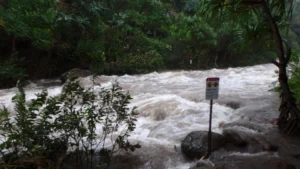
The trek to the waterfall requires navigating four major stream crossings within Hanakāpīʻai Valley. While these channels can look like peaceful, ankle-deep rivers on a sunny morning, they are fed by immense mountain watersheds further up the peaks.
Flash Flood Indicators:
-
Rapidly Rising Water: If a crossing climbs past your knees, do not attempt to brave the current.
-
Color Shifts: If clear water shifts into a muddy, chocolate-brown torrent, a flash flood is actively dropping from the ridges.
-
Survival Action: Turn back immediately. If you get pinned on the far waterfall side of an impassable swell, stay put on high ground. Never risk crossing a flooded stream; currents subside naturally within hours after mountain rainfall stops.
Shoreline Swimming
The Deadliest Beach in Hawaii
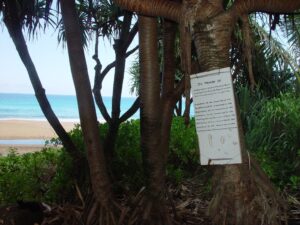
When you descend the coastal path to the golden sands of Hanakāpīʻai Beach, you will notice dynamic shore breaks and crashing swells. What you cannot see from the sand is a lethal, invisible ocean landscape completely unprotected by an outer barrier reef.
The Hidden Mechanics:
-
Unstoppable Rip Currents: Powerful undersea channels pull massive volumes of ocean water directly away from the valley floor.
-
The Ledge Hazard: Slipping or wading near the deep drop-off zone can instantly sweep an adult off their feet and deep out to sea.
-
Survival Action: Maintain an absolute zero-entry policy. Do not swim, wade, or try to cool off your feet in the surf lines. Enjoy the dramatic view entirely from a dry, safe distance.
Rogue Waves
The Threat on Dry Land
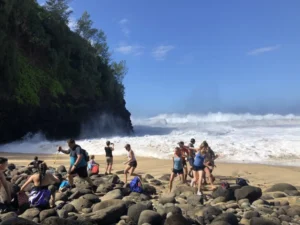
Think you are perfectly safe resting on the dry rock shelves far above the tideline? Think again. The Na Pali Coast is infamous for sudden, massive rogue waves—unpredictable surges of water that strike far beyond the normal wave boundaries without warning.
Real-Life Impact:
-
The Shattered Buffer: Even if you position your rest spot 30 feet back from the ocean, a rogue swell can instantly submerge the ledge, lifting heavy debris and sweeping hikers off their feet.
-
Rock Grinding: The danger isn’t just drowning; the sheer force of the incoming water will forcefully sweep you across jagged, glass-sharp volcanic rock shelves.
-
Survival Action: Never turn your back on the ocean. Keep a constant visual watch on the horizon line while refueling, and identify an immediate high-ground exit route.
Extraordinary True Stories of Hanakāpīʻai Survival
The Greenberg Family Flash Flood Rescue

In a dramatic true account, pediatric ER physician Dr. Rich Greenberg and his family were returning from the waterfall when a sudden mountain storm instantly triggered a violent flash flood. Within minutes, the ankle-deep stream turned into a raging torrent, sweeping multiple family members down the river.
Thanks to an extraordinary effort by everyday trail heroes and a daring, high-risk helicopter extraction by the Kauaʻi Fire Department, the family miraculously survived.
👇 Watch our exclusive video interview with Dr. Greenberg to hear the full story:
Pounded by a Rogue Wave: Michael Shapiro’s Firsthand Account
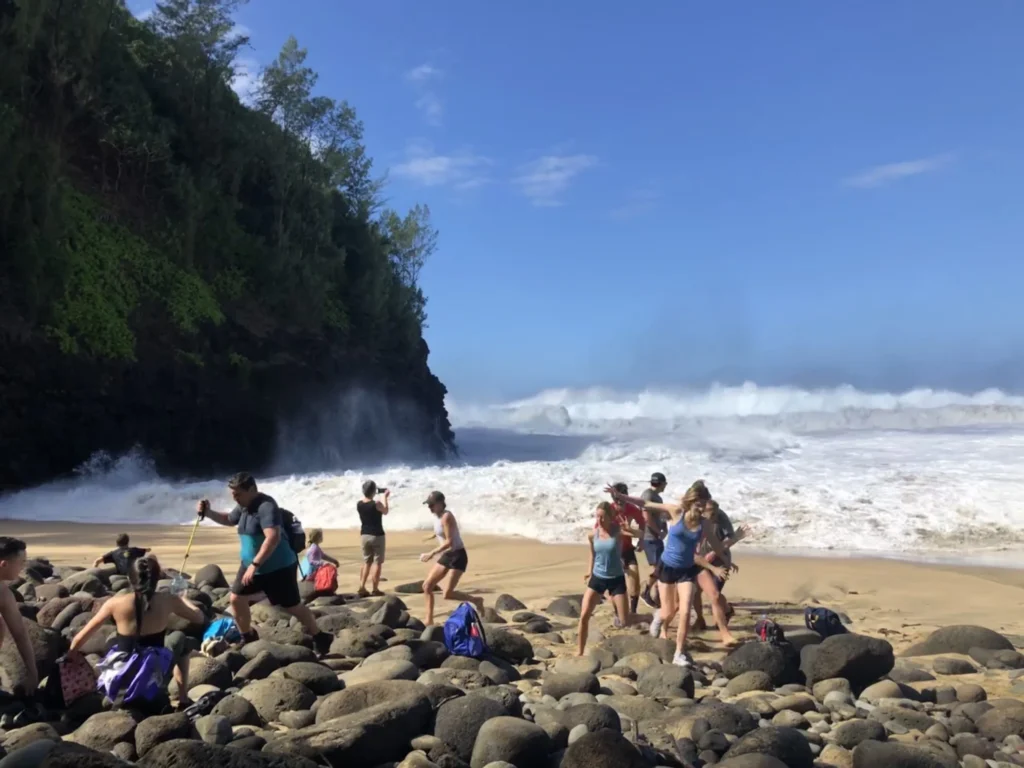
Even cautious hikers resting far above the tide line can be blindsided by the raw power of the Pacific. Outdoor writer Michael Shapiro and his companions experienced this danger firsthand while eating lunch on the dry volcanic shelves overlooking the beach.
Without warning, a massive, muscular swell exploded over the beach buffer zone, instantly submerging the hikers under waist-deep rushing water and tossing them across sharp rocks.
“It felt like getting shot out of an underwater cannon as we zoomed over the sharp volcanic rocks. I’ve swum Class IV-V rapids, but this was more frightening as we didn’t know when it would end or if it would pull us out to sea…”
Read the full, gripping breakdown of their survival, the injuries they sustained, and their subsequent emergency evacuation over on our primary trail portal:
👉
Ready for More Advanced Trail Prep?
Managing your safety inside Hanakāpīʻai Valley is just the beginning of a true island backpacking venture. If you are preparing to secure an official wilderness permit to tackle the entire, grueling 11-mile route, you will face steep drop-offs, sheer exposure, and the narrow footing of the legendary cliff paths.
For expert packing checklists, rugged gear recommendations, real-time permit notifications, and professional survival advice for safely crossing Crawler’s Ledge, check out our complete master resource hub: